Showing posts with label Food Preservation. Show all posts

Wednesday, November 14, 2012

Another Cool DIY Root Cellar Idea...


To make a nifty, mini root cellar right in the garden, simply bury a bucket and cover it with a straw bale.  For sweet, crisp carrots all winter, we always left them in the ground under a thick layer of leaves or straw to keep them from freezing. But going out in midwinter to dig carrots was not my idea of fun.

I wanted a better way to store the carrots, so I made a miniature root cellar right in the garden. First, I cut the bottom from a 5-gallon bucket. Then I dug a hole in the ground just big enough to hold the bucket with the top of it flush with the ground. I filled the bucket with just-dug carrots, placed the lid on the bucket and plopped a bale of straw on top for insulation.

The carrots stay sweet and crisp all winter — just as they did in the ground. -Mother Earth News


Tuesday, November 13, 2012

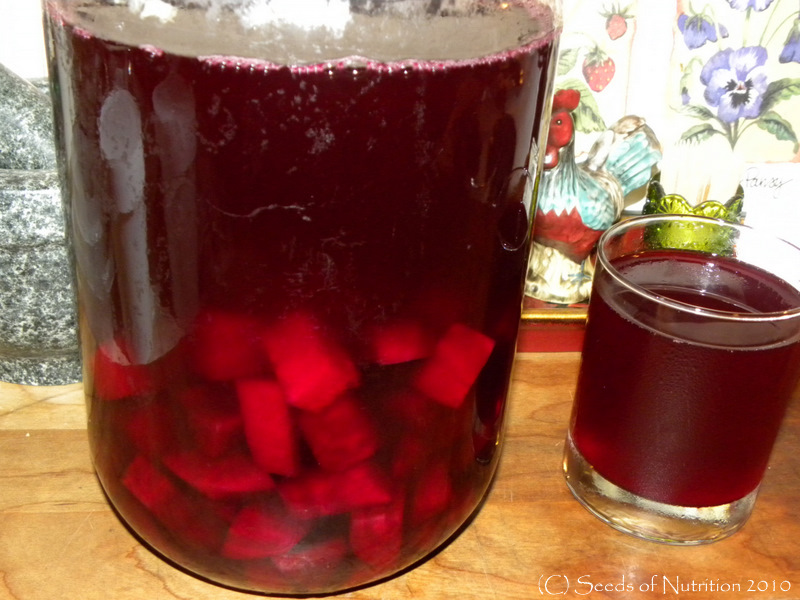
How to make Lacto Fermented Beets and Beet Kvass


Lacto-fermentation is a method of preserving vegetables. The process uses no fuel or preservatives, and allows vegetables to retain nearly all their nutritional value. Fermentation by natural lactic-acid-bacteria was used long before freezing and modern canning became standard food preservation methods. Vinegar has replaced lactic acid in most vegetable pickling processes. Before the advent of modern refrigeration and freezing, fermentation, drying or smoking were the primary methods of food storage and preservation. Asian, Indian and South Pacific cultures still utilize lactic-acid fermentation to preserve fruits and vegetables.

Fermented foods are those that have been overgrown by edible micro-organisms. These foods are pleasant tasting or nutritionally advantageous to humans. Lacto-fermentation involves converting the fermentable sugars in food to lactic acid by any of a number of "Lactobacillus" or related organisms. Diced or shredded vegetables are submerged in cool water, along with a quantity of sea salt or canning salt. The vegetables are held under the water by a weight of non-reactive material. Fermentation from naturally occurring bacteria takes place in this environment, leading to a bubbling, effervescent effect in the liquid surrounding the vegetables. The resulting product is kept in cool storage, and eaten in its raw, fermented state. 

Lacto-fermented beet products include a beet-juice beverage called kvass. Beets soaked in filtered or spring water and sea salt creates Kvass. (Some use whey but I skip it). The drink is sometimes touted as a beneficial morning drink. Lacto-fermented beet juice retains the active probiotic cultures of lactic-acid micro-organisms after several weeks in cold storage. -Excerpts from Livestrong Article

How to make Pickled Beets and Beet Kvass: 


Makes approx. 1 Quart
3 Medium Sized Beets 
1 1/2 tsp Himalayan or Real Salt
Filtered Water
Seeds from two Cardomom pods or three cloves (optional for beets but skip for kvass)
1/2 Medium Onion (optional for beets but skip for kvass)

Chop the Beets (and onions if adding) into pieces as pictured above.  Place beets (and onions) into a well sterilized, wide mouthed, quart sized mason jar and press down lightly with a meat hammer or juicer pressure. Add salt (and spices if using) and fill jar with filtered water, enough to cover the beets.  The top of the beets should be at least 1 inch below the top of the jar.   Cover tightly and turn up and down several times to mix, then open and press the beets down again so they are below the water.  Cover tightly again and keep at room temperature for about 3 days before transferring to cold storage.  During the three day process if you notice the beets rising above the water open and press below water, and then close tightly again.

For Kvass, just remove the beets...and drink the liquid!  One four ounce glass, morning and night, is an excellent blood tonic, cleanses the liver, and is great for digestion and maintaining healthy intestinal flora. 

And here is a magical recipe I found for Citrus Ginger Beet Kvass! OMG.

Enjoy and have fun Lacto-fermenting!!!

DIY Dehydrated Egg Powder & Hamburger Rocks For Long Term Storage

Dehydrated Egg Powder


Unbeknownst to many people, eggs can in fact be stored (up to 10 years if stored correctly) in the form of dehydrated egg powder — perfect for bug-out bags, camping trips and long-term food storage.
They can be used in baked goods just like normal eggs or reconstituted and made into fluffy scrambled eggs.

Here’s how you can do it at home:
-A food dehydrator
-Eggs
-Something to store the powder in when complete

Dehydrated Hamburger Rocks for Long Term Meat Storage 


This is a great way to store hamburger for long periods of time or as a portable hiking component of meals. Once prepared it only requires a cool, dry place safe from pests. If properly prepared and stored, they can last up to two years. Rehydrated as needed, Hamburger Rocks are perfect for tacos, spaghetti sauce, hamburger helper, tamale pie, lasagna and any other recipes calling for lean ground beef. You can start with regular ground hamburger but ground rump and pot roast yields a slightly superior product. My advice is to make your first batch with regular ground hamburger then try other combination as your budget, sales and tastes dictate. If you’re feeling truly experimental, you can try hunting/game animals such as rabbit and venison. These are generally much leaner than domesticated stock so be sure to let us know how it turns out.


Monday, November 12, 2012

How To Make an Electricity-Free Refrigerator


"Conventional refrigeration does an incredible job keeping food fresh. But that technology hasn't helped desert dwellers without steady electricity. A more recent development in refrigeration—the Zeer pot-in-pot refrigerator—only requires water, sand, and a hot, dry climate to preserve produce through evaporative cooling. Here's how to make the simple gadget..." Click Here to Read Full Article